
If the first few steps after getting out of bed feel like stepping on a stone, you may be dealing with plantar fasciitis. It is one of the most common causes of heel pain in adults, affecting runners, people who stand all day at work, and anyone who has recently increased how much they walk.
What is plantar fasciitis?
The plantar fascia is a thick band of tissue running along the sole of the foot, from the heel to the toes. It supports your arch and absorbs load every time you step. When it is overloaded faster than it can adapt, it becomes irritated and painful, usually where it attaches to the heel bone.
Common signs
- Sharp pain under the heel with the first steps in the morning
- Pain after sitting, which eases once you get moving
- Pain that returns after long periods of standing or walking
- Tenderness when pressing on the inside of the heel
What makes it more likely
- A sudden increase in walking, running or standing
- Unsupportive or worn-out footwear
- Tight calves or reduced ankle movement
- Working on hard floors for long shifts
- Changes in body weight
What you can do at home
- Gently stretch your calves and the sole of your foot before getting out of bed
- Roll the arch of your foot over a ball or frozen water bottle for a few minutes
- Wear supportive shoes and avoid going barefoot on hard floors
- Reduce high-impact activity for a while rather than stopping all movement
- Build up walking or running distances gradually
Treatment options
Most cases improve with the right combination of load management, stretching, strengthening and hands-on care. Remedial massage can ease tight calf and foot muscles, and our practitioners can guide you through exercises suited to your stage of recovery.
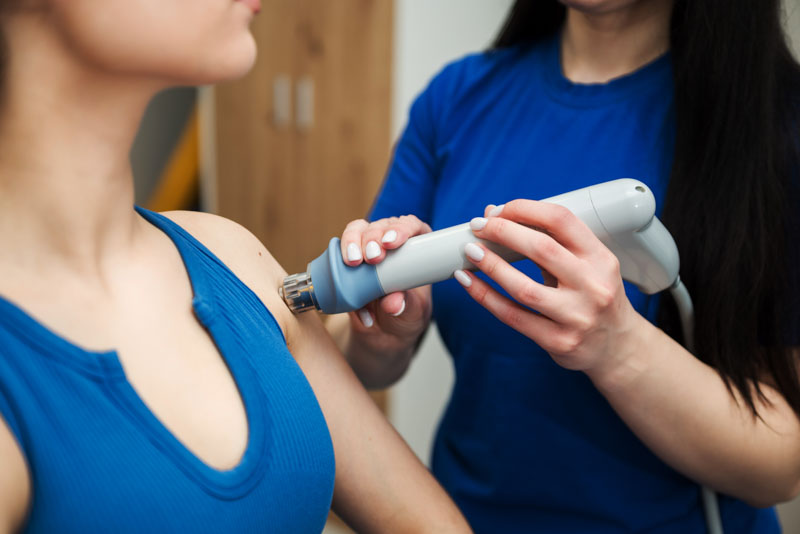
For heel pain that has lingered for months, radial shockwave therapy is another option. It delivers pressure waves into the affected tissue and is commonly used for stubborn tendon and fascia problems. Shockwave therapy is available at our Bundoora clinic, and your practitioner will assess whether it is suitable for you.
If heel pain is changing how you walk or stopping you from exercising, book an assessment online or call the team for advice.